 Steve PMH
When you think of jazz music, you’ll often fail to define it. That’s because, much like its structure, jazz has always been amorphous and yet emotionally dynamic. Like Louis Armstrong once said, “If you have to ask what jazz is, you’ll never know.”
Jazz music is often played with a piano trio, a pianist, a double bass player, and a drummer. As it evolved, other instruments found their place in improved harmonies, such as the trombone, the saxophone, and the clarinet.
Despite becoming well-known in the early 20th century, jazz was first invented in the early 1800s by African American musicians. While shapeless, jazz music can be traced back to traditional African music and melodies.
Brewed at the dawn of what was to be the civil rights movement, the introduction of jazz almost marked a time where African Americans started embracing and preserving their ancestral heritage and culture.
With all that said, stick around to learn more about jazz music and its many enticing types.
A Bit of History…

When we listen to jazz music, a patchwork of images, sounds, and feelings accompany it. You might think of New Orleans, Louis Armstrong, and the Harlem Renaissance.
The inception of jazz during the 1800s was, at the time, resistance music. African American and mixed citizens faced many repressing formal and informal laws within society. The creation of jazz and jazz clubs was an intimate alcove of free expression, within which they could create their own rules.
During the 1920s and 1930s, jazz migrated from New Orleans to New York City, and a revivalist art movement known as the Harlem Renaissance emerged.
While New Orleans was buzzing with jazz, Harlem’s jazz clubs were brewing with new ideas of inclusivity, freedom, and civic resistance. The free language of jazz protested the restrictive laws of the time and eventually became the marching beat of the Harlem Renaissance movement.
It was so influential that Langston Hughes, one of the most famous Harlem poets, wrote his rhythms formless and random, like a musician would a jazz sheet music.
As jazz evolved throughout the years, it not only added more to art, culture, and music, but it brought more recognition to African American artists who fought to keep their heritage alive.
Early Jazz
Also known as Trad jazz, New Orleans jazz, and Hot jazz, this early form of the genre came up between the 1910s and the 1920s in New Orleans.
Early jazz was inspired by ragtime, blues, and marching band music. It featured common jazz instruments, such as the piano, double bass, and drums, as well as integrating others, such as the clarinet, trombone, tuba, and saxophone.
Improvisation in jazz performances started with early jazz. Jazz was often played with no sheet music and no strings attached, translating the free language of its creation. It was layered, rich, and complex.
Some of the most beloved jazz musicians and records emerged during this era.
Louis Armstrong was one of the most prominent ones. He was a significant Trumpet soloist and helped record one of the most influential recordings of all time: The Complete Hot Five & Seven Recordings. His style was both powerful and charismatic.
Other famous artists were pianists and composers: Jelly Roll Morton and Bix Beiderbecke.
Swing & Big Band Music
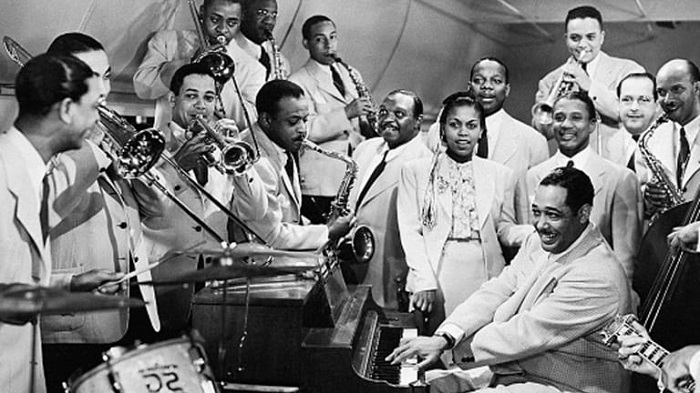
Emerging during the 30s and 40s, Swing—or Big Band jazz—came at a time where band obsession swept over the country like a fever. This subgenre of jazz evolved and rode this wave to ultimate success.
Bands with over 20 members would take stages by storm and play groovy music that both the band and the audience would dance to. Some artists would have solo parts to break rhythm and satisfy large energy-driven crowds.
This intimate interaction created a special bond between the musicians and the people enjoying their music. It also defined concerts as a hotspot for social gatherings.
Recognized as a popular form of dance music, Swing was much more structured than its predecessors. Clear, simple, and groove-centered was the direction of this band-driven genre. Improvisation existed only as slight embellishments to existing melodies, yet it was just as catchy and energetic.
Duke Ellington was one of the most influential Swing musicians. Considered the most successful jazz composer, he was also a key bandleader. Soloists, too, found their place in this era, with Coleman Hawkins exhibiting the tenor saxophone as one of the leading jazz instruments.
Bebop
Bebop came right after Swing music and was defined as its antithesis. One could say they were different sides of the same coin. While Swing music grew to be a dance-driven genre, Bebop was contrastingly sophisticated and intellectual.
However, Bebop was anything but boring. Its edgy and vibrant tone was so enticing that it encouraged its audience to listen to every bit of it, entirely focused. Bebop made good use of blues inflections, daring improvisations, and loud harmonic syncopation.
Despite their differences, some of Bebop’s characteristics have their roots in Swing music. It, too, was played by a music group (albeit a smaller one). Plus, it also used fast tempos and focused on giving the audience seasoned solo performers.
Some of the most prominent musicians of that era were Charlie Parker, Bud Powell, and Thelonious Sphere Monk. Charlie Parker made two of the most successful records in that genre: The Complete Savoy and Dial Studio Recordings and Jazz at Massey Hall.
Gypsy Jazz
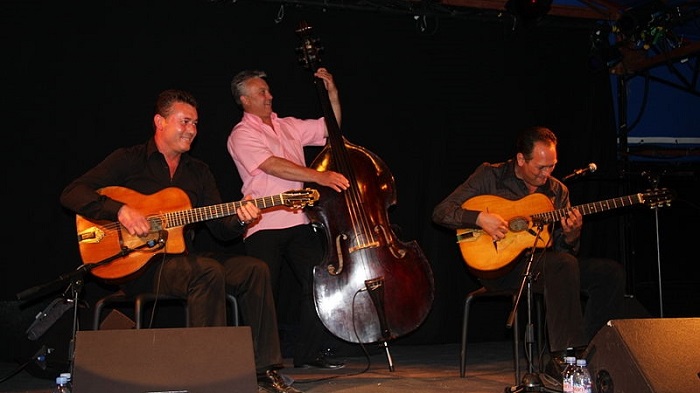
This subgenres’ creation is attributed to guitarist Django Reinhardt and violinist Stephane Grapelli. These two were the first to establish a major European jazz group, and in their success, created a new form of jazz: Gypsy jazz.
Named after the nomadic Romani folk who often played it, Gypsy jazz displayed many of the same free-spirited and rule-breaking characteristics its namesake had.
Smooth and elaborate, this sub-genre emerged during the 30s in Europe, while America was still blasting Big Band music. While Swing was easy to dance to, Gypsy jazz was just as easy to sing to. Its melodies were traceable, clear, and earthy.
Gypsy jazz often featured guitars, violins, and double bass—and no drums. One special characteristic of this subgenre is the “boom-chick” effect guitars were often used to create, using a unique form of strumming called “the pump.”
The intricate tradition of Gypsy jazz still resumes to this day. Contemporary artists such as Biréli Lagrène and the Rosenberg Trio continue to contribute.
Cool Jazz
As you might have noticed by now, jazz evolution often comes in daring waves of opposing new ideas. Each new trend must relinquish the one before it and react contrastingly against it. This 50s style of jazz is no different.
As its name hints, this type was a much-needed laid-back version of the frantic funky Bebop. Soft and mellow, Cool jazz offered an emotionally “cool” and casual alternative.
Its relaxing tenor partly resulted from classical influences. It features classical instruments, such as the French horn, the tuba, the flute, and the vibraphone. Musicians Dave Brubeck and the Modern Jazz Quartet used such instruments in their complex yet comprehensive compositions.
Hard Bop

Following the airy Gypsy Jazz and laid-back Cool Jazz, Hard Bop emerged during the 50s and 60s to an audience who felt that jazz was becoming too European for their taste. The result was a new style of jazz mixed with blues, gospel music, and Bebop influences.
This new jazz genre featured new original and unconventional compositions that were more Afrocentric in origin and sound. Musicians predominately used the saxophone and piano. In addition, the electric organ—also known as the Hammond organ—was sometimes used.
Hard Bop has a slow tempo and is melodic and harmonious, compared to its similar predecessor: Bebop Jazz. This sub-genre is often described as the love child of blues and gospel music, taking its soulful melodies from the former and its chord progressions from the latter.
Prominent Hard Bop musicians include saxophonist and composer John Coltrane, tenor saxophonist Sonny Rollins, and jazz pianist, composer, and arranger Horace Silver.
Modal Jazz
If there was one thing to differentiate this type of jazz, it is undoubtedly its strong structure. This sub-genre pushed the boundaries of what defined jazz by unifying its modulation and abandoning chord progressions.
Developed during the late 50s, Modal Jazz was made to be simple, enjoyable, and familiar. Performers would often improvise, but it would be within the corresponding scale (also known as a mode) or more to another one. This made it a more harmonic, melodic, and serene experience.
It was Miles Davis and John Coltrane who first pioneered this type of jazz. Later, artists such as Wayne Shorter, Herbie Hancock, and Joe Henderson added more creative arrangements. Switching more quickly between chords and modes to create more stable unique compositions.
Free Jazz & Avant-Garde Jazz

This style was known as Avant-Garde jazz. Emerging during the late 50s and early 60s, Free jazz—like its name hints—was designed to be free of chord progressions or any sort of arrangement.
Free jazz was created to reject the “Bop” catalog and sought to dismantle its limited elements. The style refused to use composed arrangements, quick tempos, harmony, and chord changes. It also has African origins.
The word “free” doesn’t just describe the rhythm and compositions of this style, but also its relation to the civil rights movement. Its Afrocentric roots made it a type of resistance music against the restrictive laws of the time.
Free jazz was also composed for solo musicians. Dedicated Free jazz soloists would often play alone to give the audience a performance free of restrictions and form. Needless to say, improvisations were heavily used.
Post-Bop
We know you’ve heard Bebop and Hard Bop, but not post-Bop. Here’s all you need to know about this peculiar melting-pot of influences.
Post-Bop featured the return of Bebop, hard bop, free jazz, and modal jazz—all under one name. This unorthodox combination resulted in a style that was amorphous in structure, erratic in rhythm, and had longer individual solos.
Growing in popularity from the early-to-mid-1960s, it was a reexamination of what makes jazz music click. And the result was a complex, layered, rich arrangement that is incomparable. When it comes to intricacy, post-Bop remains unchallenged.
Latin Jazz
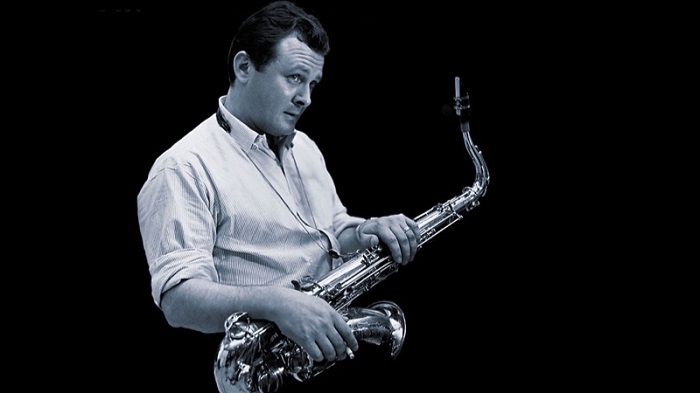
Latin jazz started emerging in the 40s and resurfaced during the 1960s. This subgenre is made up of two categories: Afro-Cuban and Afro-Brazilian. Both types relied on percussion and woodwind instruments. The melodies were airy, and the composition heavy and frantic.
Jazz has always been an amalgamation of different sounds that come from diverse backgrounds. Jelly Roll Morton once described jazz as having a ‘Spanish tinge’ to it. And so, when the influences of Latin American music plied up and produced an entire genre, it was extremely popular.
When Latin Jazz was first taking form, it took the form of Afro-Cuban music. Like Swing, it’s considered dance music, with its rhythms enhanced by claves, timbales, and bongos.
Afro-Cuban jazz was most famously played by Cuban musicians Mario Bauzá and Frank Grillo in the band Machito.
Afro-Brazilian jazz, on the other hand, is toned-down compared to its sibling. It features more funky melodies and less percussion, being heavily inspired by bossa nova and samba.
Afro-Brazilian jazz featured musicians like American saxophonist Stan Getz, Brazilian guitarist Joao Gilberto, and Dizzy Gillespie.
Jazz Fusion
Also known as Progressive Jazz, Jazz Fusion came about at a time when electronic instruments, elements of soul, funk, and R&B were poured into the bottomless stirring pot of jazz.
This conversion took place in the 1960s, and the result was a diverse, rich, popular style of jazz. Its commercial success was massive.
This mixing of genres didn’t stop at that. In the 70s, American jazz pianist, keyboardist, and composer Herbie Hancock incorporated disco music into the mix. This encouraged other artists to experiment, and what eventually led to the creation of Smooth Jazz in the 80s.
Despite all its contributions, though, Fusion was negatively viewed by jazz purists who favored the individuality of jazz over its inclusivity. Their main argument was that, unlike its predecessors, it had no real roots.
Smooth Jazz

The emergence of Smooth jazz was a product of the great commercial success of Jazz Fusion. It was made with the intention to be of the same success and to be a crossover sub-genre that challenges the limit of jazz itself.
It’s the first subgenre of jazz to feature pop and lo-fi music, which previously were uncharted territories. It also includes R&B, rhythm and blues, and soul influences. Typical jazz instruments are used, along with new ones like synthesizers and the electric bass.
Compared to the improvised style of Fusion, Smooth jazz is much more structured and predictable in composition. Smooth jazz was made to be familiar, friendly, and inclusive, a mellow sound that welcomes all to enjoy its experience.
Influential names in Smooth jazz include American saxophonist Grover Washington jr., saxophonist and composer Kenny G, and American guitarists George Benson.
Modern Jazz
Modern jazz—also known as Contemporary jazz—is a term open to what you’d consider as “modern” or “contemporary.” It also depends on the era you’re living in. However, most musicologists consider modern jazz as any genre that was produced after the 1990s.
Modern jazz performers will often reject chords and opt for an improvised performance. It views the dense arrangements, fast tempo, and heavy percussion of the “Bop” era as restricting and outdated.
Layered melodies and slow non-rigid harmonies are the common themes in Modern jazz music. Plus, complex arrangements that were also comprehensive were used.
If that sounds familiar to you, you’re not wrong. Ironically enough, modern jazz can be seen as a fateful return to jazz’s earliest forms.
Modern jazz also saw jazz reaching far corners of the globe and finding homes in new cultures. Distinctive artists that contributed to Modern jazz music were Norwegian tenor and soprano saxophonist Jan Garbarek, American composer and pianist Vijay Iyer, Norwegian musician Marius Neset.
The Cultural Role of Jazz
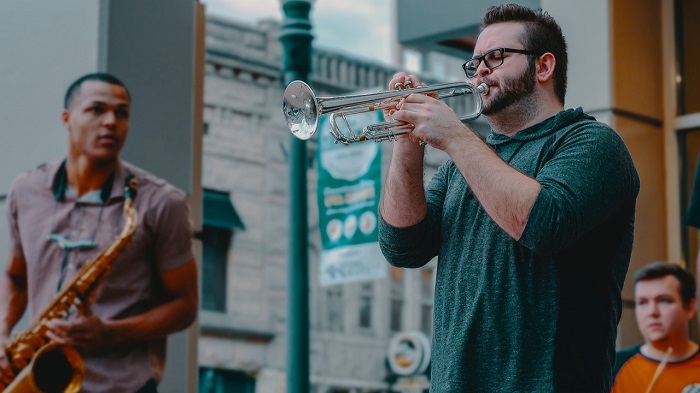
Jazz music is one of the most influential genres of music out there, and that’s because it was created for one reason: to create a safe space for all kinds of people.
The wholeness of its purpose didn’t stop it from evolving, though. Each subgenre emerged as a result of opposing reactions to the one before it. No two subgenres were alike, just like no two performances were.
Jazz’s evolution always pivoted on the people and the cities that loved it. Each subgenre is a reflection of the society it was born in. That’s why you’ll find that jazz is deeply integrated with history, art, and social revolutions.
Its emergence time-stamped the great migration, the Harlem Renaissance, and the civil rights movements.
This revolutionary need for the revival and preservice of African American traditions and cultures gave birth to something entirely new and ever-changing. Moreover, its history and evolutions are remained rooted within the people who made it.
As it, too, restrained against limitations, came the freedom of its structure. Its hunger for new possibilities made it interact with new sounds, instruments, and even cultures—all the time. And in this inclusivity, it found global success and resonance.