 Steve PMH
Although you might be highly interested in music, studying the music theory might not be your favorite activity.
Especially for a new learner, understanding all the terminologies and what they exactly mean can be a little challenging.
One of the terms that you’ll probably hear regularly in musical circles is the word mode.
So, what is a mode in music? How many types of modes are there?
Read this article to learn more about how you can use modes to play and produce the best musical compositions.
What is a Mode in Music?
In music, a mode is formed when you play any major scale but without starting from the scale’s root note.
Instead, you pick another note to create a dramatic and intense effect.
In this sense, the mode refers to how the same scale might sound when you change how you approach or manipulate it.
This is the exact same definition that you can apply when you use the word mode in a gaming context, for example.
It’s the same game, but you’re playing it differently.
Now back to music, If you take the C major scale, for example, and decide to play it from C to C, you’ll get a usual, happy, and somehow expected effect from the notes as they’re played in order.
Using the same scale, you can spice things up a bit and play it from D to D.

The result is a more intense, sadder, and darker sound. Every major scale in modern music will result in seven modes.
According to this concept, and in the most basic form, major modes usually have a bright, happy, and uplifting tone or character.
In contrast, the minor modes have a sad, depressing, and dark tone or character.
Because there are three different types of minor scales, melodic, harmonic, and natural, there are actually 21 modes based on them, as each scale can create seven modes.
Nevertheless, most of these minor modes are barely used in western music.
The concept of the mode in music proves that you can get both tones or feelings from any scale, based on how you choose to start your notes.
What are the Different Types of Modes?
There are seven notes in a major scale, and each one of them can be used as a starting point to create a different mode.
As a result, each scale will have seven different modes in western modern music based on where it starts and how it progresses.

The Greek philosopher Aristoxenus of Tarentum is probably the one who gave modes their names.
Each mode is named after an ancient Greek tribe, as some believe that the mode’s character and tone color corresponded to the characters for which tribe members were famous.
Others believe that he chose the names to honor these tribes.
In Ancient Greek music, there were eight modes that the church later adopted in medieval times to create the Gregorian modes.
According to some scholars like Heinrich Petri, there were even twelve modes.
The seven modern models belong to the diatonic scale.
So, each one of them is made of seven notes with five intervals that are tones and two intervals that are semitones.
Yet, each one of them will sound differently and can be used in music to convey a specific meaning.
Ionian Mode
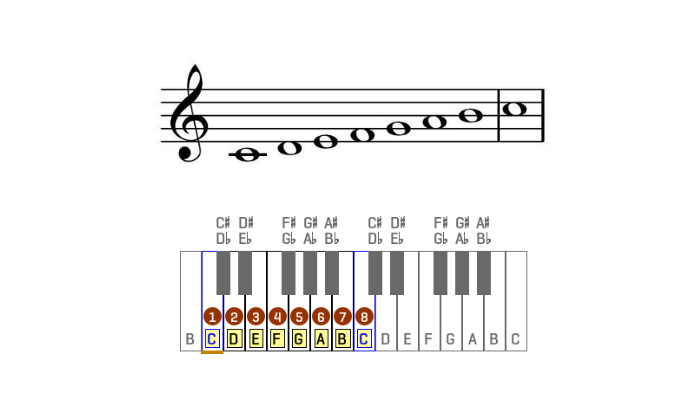
The Ionian mode is a diatonic scale that corresponds to the modern major scale.
So, if you start it from a C, it will be the C major scale with no sharps or flats.
This scale is divided by the G tone, which is the tenor in the scale. It’s also the second most important note after the tonic.
Heinrich Glarean, the Swiss music theorist, gave this mode its name.
Because of its uplifting nature, this mode is widely used in movie themes like Indiana Jones by John Williams.
He is so fond of this mode that he uses it in most of his compositions, including the Olympic Fanfare.
Just like other major modes, this mode is called major because the third note is a major third above the tonic or the first note in the scale.
Dorian Mode
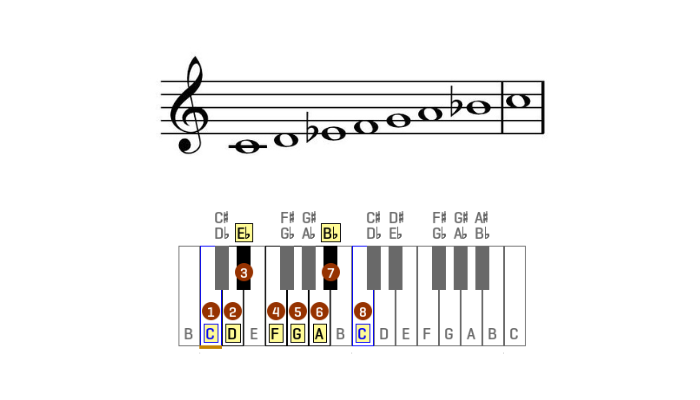
The Dorian mode is a minor mode because the third note in the scale is a minor third above the tonic.
So, instead of playing a major scale, you need to flatten the third and the seventh note.
The history of this mode goes back to the second century when the Egyptian Ptolemy, a music theorist, mathematician, and astronomer, wanted to design transposition keys.
He developed eight modes that were later used in church chants.
The modern version of the Dorian mode is called the Russian minor, and it’s considered a symmetric scale because the pattern of tones and semitones is the same whether you move across the scale ascending or descending.
The Dorian mode has a cheeky character compared to the natural minor scale, which is naturally sadder.
It can be a little dark or sad but with some hope or slightly uplifting tones.
For this reason, this mode is used in various rock and jazz songs as it conveys more complicated feelings.
Phrygian Mode
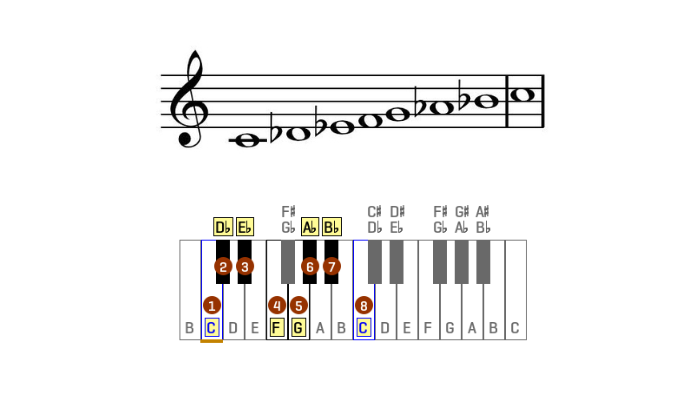
This is another minor mode, and just like the Dorian mode, there are three versions of this mode, the Ancient Greek one, the medieval one, and the modern one.
In modern western music, the Phrygian mode is related to the Aeolian mode, the natural minor scale, but the only difference is that a single semitone lowers the second degree.
Named after the Phrygia Kingdom in Anatolia, this mode is used to convey the feeling of sadness.
It’s one of the darkest modes in modern music because most of the notes are flattened or lowered by a semitone.
Scheherazade by Rimsky Korsakov is a clear example of how this mode is used to create a feeling of anticipation and fear of loss without being too depressing.
This mode is also widely used in North African and Spanish music.
You can find this mode in contemporary jazz, metal, and rock songs. It gives a mysterious and powerful feeling.
The Phrygian mode is also popular in hip-hop music where it’s supposed to create an intimidating feeling.
Lydian Mode
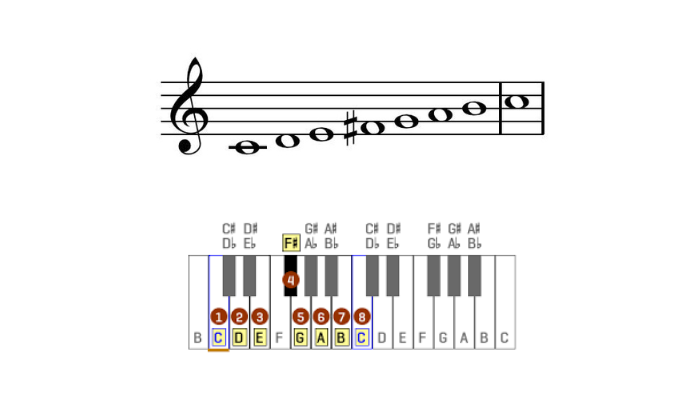
This is the fourth mode and the second major one.
In this mode, the fourth scale is raised by a semitone, and just like other modes, it was named after the Kingdom of Lydia in Ancient Anatolia.
In ancient Greek music, this scale featured notes that were raised by a quarter-tone or half semitone.
However, in modern western music, the half semitone was omitted, although it’s present in other music genres like Middle Eastern music.
The Lydian mode begins with three whole tones, followed by a semitone, two whole tones, and another semitone at the end.
When the Lydian mode is played, it creates feelings of playfulness, fascination, and mischief.
In classical music, the third movement of Ludwig van Beethoven’s String Quartet No. 15 in A minor is an excellent example of how this mode is used to mixed feelings of hope and fear.
It’s also used when the composer wants to create a heavenly and otherworldly sound or an extra-terrestrial effect.
This is probably one of the reasons why John Williams used it in the score of the famous movie E.T. and why he used it in the Jurassic Park theme, as it creates feelings of unrest.
The Lydian mode is quite popular in rock and metal music because of how powerful it is.
It’s also used in modal changes or modulation, where one chord is borrowed from a different mode to add more depth, drama, and interest to a musical composition.
Mixolydian Mode
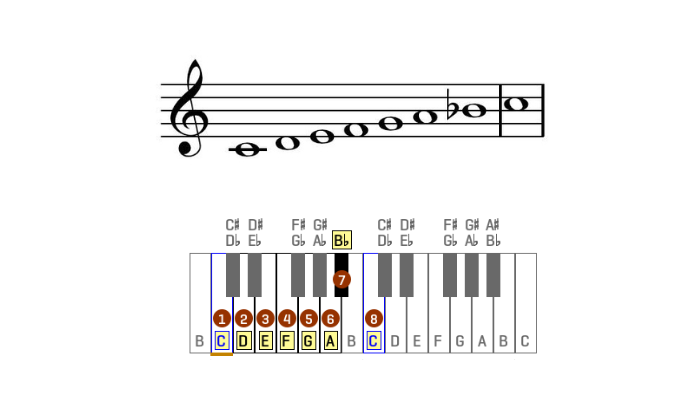
This mode is a major one, and it sounds just like an Ionian mode, but there’s a difference in the seventh degree.
Instead of a major note, the seventh degree is a minor one.
So, the seventh degree is no longer a semitone lower than the tonic but a whole tone lower, becoming a subtonic to the tonic.
Unlike other modes, where the Greek, medieval, and modern explanations somehow relate, this mode had an entirely different concept in Ancient Greek music.
The Greek Sappho, a famous musician and poet, most probably developed it in the 7th century BC.
According to her definition, the Mixolydian mode corresponded to what we currently know as the Hypolydian mode.
In the 9th century, this mode became one of the eight modes used in church chants. The Greek mode ran from B to B, while the medieval one ran from G to G.
Because G is the dominant tone in the major or Ionian mode, the Mixolydian mode is usually called the dominant scale.
The Mixolydian mode is neither fully major nor fully minor, although it’s theoretically a major scale.
This is why it’s widely used in R&B, jazz, blues, fusion, and pop songs, where it creates a bittersweet feeling.
It can be exotic and haunting but not totally depressing or dark.
Aeolian Mode
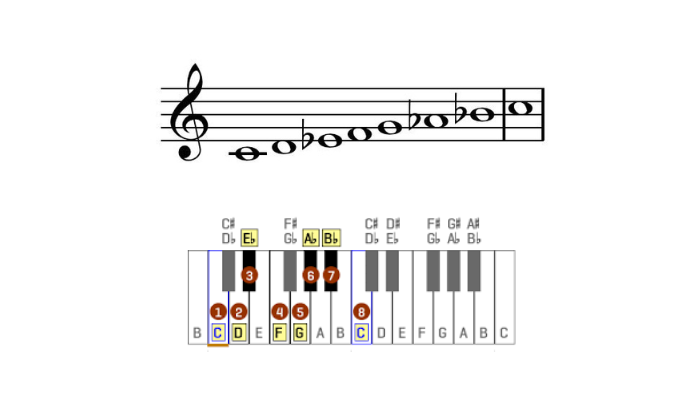
The Aeolian mode is the natural minor scale, where a semitone lowers the scale’s third, sixth, and seventh degrees.
It started with an A on the piano and was named after the inhabitants of the Aeolis region.
It was widely recognized in medieval times as one of the mixed modes, where it was more like a mixture between the Dorian and the Ancient Greek Hypodorian modes.
In modern music, when played from an A, this will be the minor relative to the C major scale.
The Aeolian mode is widely used in modern musical compositions and songs where it can be used to convey feelings of sadness, despair, darkness, melancholy, and longing.
It’s also one of the most popular modes used in improvisation and modulation.
Locrian Mode
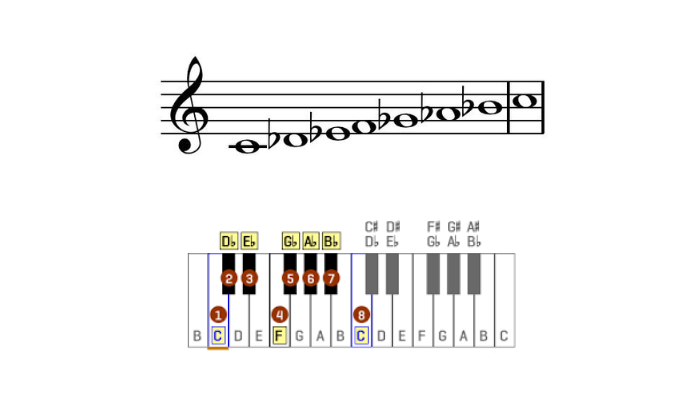
The Locrian mode is the seventh mode in modern western music and is considered a minor one.
It’s distinctive in nature because the third and fifth steps are flattened or lowered by a semitone, so it’s also known as the half-diminished scale.
Named after the Locris region in Ancient Greece, this is one of the oldest modes in Ancient Greek music that was later incorporated into medieval church music.
However, the use of this mode in modern western music became less popular after the 18th century.
Unlike other modes, the Locrian mode is the only diatonic mode in modern music where the tonic triad is considered dissonant because it’s based on a diminished chord.
The mode that we now refer to as the Locrian mode was originally called the Hyperaeolian mode.
Because of the unusual way it’s built, the Locrian mode is probably the least widely used mode in modern music.
However, it can be used to convey feelings of tension, creepiness, fear, and instability.
As a result, you can find it in some jazz songs, but it’s only used over diminished chords.
In modern pop songs, the Locrian mode creates a haunting feeling, and because it’s dense, it’s not that popular.
However, it can also be found in several classical pieces like the Prelude in B minor, op. 32, no. 10 by Sergei Rachmaninov, and Symphony No. 4 in A minor, op. 63 by Jean Sibelius.
How Can You Incorporate Different Modes in Your Music?

In order to use modes correctly, you need to understand how they differ from scales.
Modes are created from scales, but unlike scales that have a tonic or root tone, modes can start from any key.
Nevertheless, they follow the same interval patterns of a major or a minor scale, depending on the nature of the mode.
You can use any of the seven modes of music to introduce unique tonalities into your music rather than sticking to the default scales.
This is done by switching between the major scales, for example.
So, instead of sticking to the major or Ionian scale, you can use the Mixolydian one, which is also a major mode with a twist.
Instead of a minor or Aeolian scale, you can choose a Dorian one and replace a diminished scale with the Locrian mode.
Use these different modes in writing your music or while improvising when you’re trying modulation to see how your music will sound new and mysterious.