 Steve PMH
We’ve all heard about labels and artists named after genres, but have you ever heard of a genre named after a label?
That’s what happens when we’re talking about a renowned, influential, and elaborate label like the Motown Sound.
Join us as we discuss the label’s history, how it put the foundation of a whole genre, and where it stands now.
What Is Motown Music?

In the music world, Motown can be identified both as a label and a music genre. It’s believed that no other record company in the music industry managed to get to the Motown Sound’s ranks.
That’s why when you hear the word ‘Motown,’ you hardly think of the genre, instead associating it with the label.
When Berry Gordy created the company in the early ‘60s, it was all about R&B music. Then, it moved into other genres like New Jack Swing and Psychedelic Soul, sealing its iconic status as one of America’s most renowned labels.
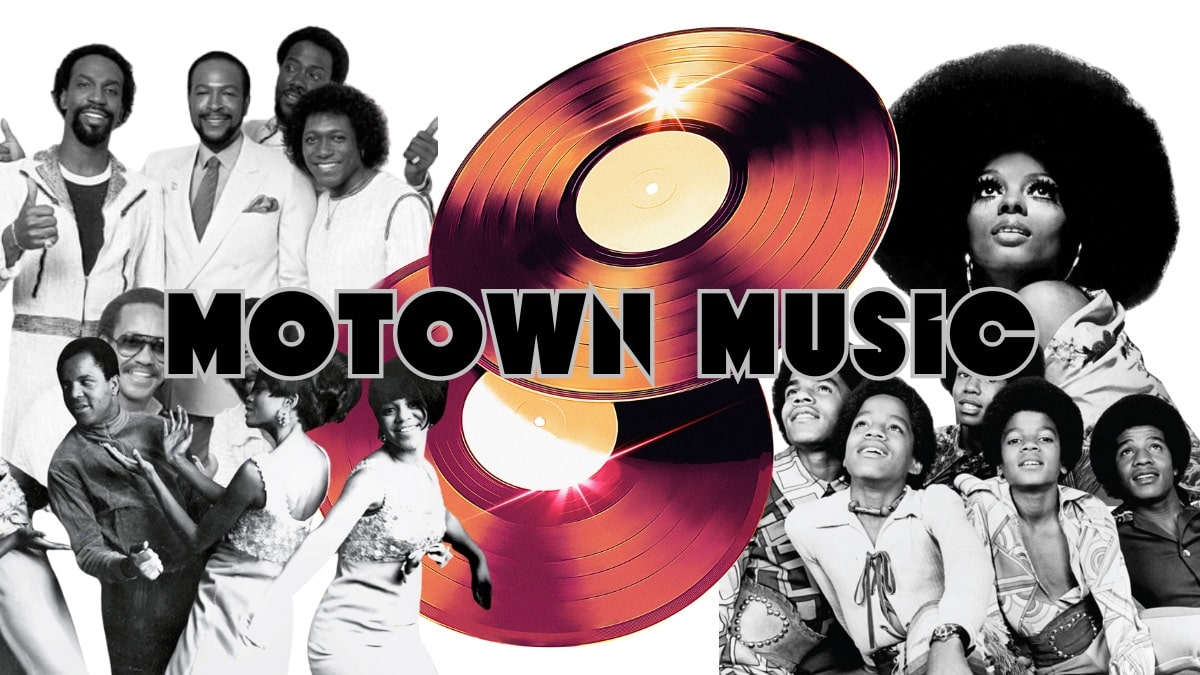
The label helped introduce an array of famous worldwide artists, including Diana Ross, The Jackson 5, Marvin Gaye, Stevie Wonder, and Martha & The Vandellas.
The Motown Sound reached unrivaled fame, up to the point that a whole genre was based on it. Like most American genres, it originated and started in Detroit.
The Full History of Motown Sound
Although Motown Sound didn’t produce major hits under its name until the ‘60s, it was set in motion a couple of years prior.
We bet Berry Gordy never thought his label would reach the worldwide fame it’s basking in today! Some fans even describe the label as ‘the music that changed America.’
If you think the same, read on to learn about Berry’s journey from the Detroit streets to being one of the industry’s most renowned producers.
How It All Started
In 1959, the Detroit-born Berry Gordy, originally an automobile worker and a boxer, founded his first label, Tamla Records. He was only 29 years old at the time, and he didn’t have the kind of money to build a label. He did it on an $800 loan from his family’s savings.
Merely one year later, he met with Smokey Robinson, a ten-years-younger songwriter who helped him put the foundation of Motown Sound.
Both were nascent songwriters and adamant about success, which pushed them to write and sing the first songs of the record label.
Robinson was already a lead singer by then, having joined a band called ‘The Miracles.’ When he established Motown with his friend, he wrote and sang some of the label’s most memorable hits, such as ‘Shop Around,’ which was the label’s first production.
A year later, Motown produced ‘Please Mr. Postman’ that The Marvelettes sang. It became the first No.1 song of Motown Sound, and a lot of songs later followed.
Throughout the Sixties

Although they started strong, Motown never reached their high ranks until well into the Sixties. Throughout the decade, they produced a multitude of songs that are unrivaled to our day. The list goes long, but here’s a brief preview:
- Dancing in the Street – Martha & The Vandellas
- Heat Wave – Martha & The Vandellas
- Where Did Our Love Go – The Supremes
- Reach Out; I’ll be There – Four Tops
- Get Ready – The Temptations
- Stop! In the Name of Love – The Supremes
- The Way You Do the Things You Do – The Temptations
At that time, Motown Sound was the pride of Detroit. No one would’ve thought a music label created by two novice writers would be written in the pages of history.
Gordy tried to label Motown Sound as ‘The Sound of Young America,’ stamping the word everywhere on the vinyl records. However, the label established itself as the pride of black America instead.
From the Detroit Riots to1972
Though things went well for Motown Music for the larger part of the ‘60s decade, they started to go south around the Detroit riots in 1967.
Some artists, like Holland Dozier Holland, thought their success substantially exceeded their level of pay. And so, they broke off from Motown, looking for opportunities that’ll get them more cash.
At the same time, a lot of the rock acts that were signed with Motown started to decline. And some artists like Diana Ross were forced to make a transition to pop to keep competing in the charts.
Dissatisfied with the way things were going with Motown, Gordy started looking west, thinking what his company needed was involvement in movies and television in Los Angeles.
The slump only went on for four years until 1971. A lot of musicians believe Motown Sound got its glory back because of the release of ‘What’s Going On’ album by Marvin Gaye.
The album was different from all works that were produced by Motown. It’s considered the grandest musical statement of the label—all because it provided something different than what the fans were used to.
Fun fact: Gordy famously called the title song of this album ‘the worst song he’s ever heard!’
In 1972, things were starting to get better for the label. Stevie Wonder was already 21 and on his journey to becoming one of the most prominent musical figures of the 20th century. On top of that, Motown ditched Detroit and went for L.A. instead, where it went to unrivaled levels of fame.
Between 1972 and Now
1972 was the year of major change for Motown Sound. It’s the year Gordy took the decision to move the headquarters to Los Angeles, deserting the origin town, Detroit.
By then, L.A was a major hub for the music industry. If you wanted success, you needed to be associated with L.A.
From 1972 and well into the ‘90s, Motown was signing new stars, compensating for its loss of artists like Holland Dozier Holland, who ditched the label in 1967.
In that period, Motown debuted a lot of artists who later made it to worldwide fame, including The Commodores, Rick James, Erykah Badu, and Boyz II Men. The most prominent signing of that era remains The Jackson 5—Michael Jackson’s first step into his legendary musical career.
A couple of decades later, specifically in 2005, Motown had a revolutionary merger with the Universal Music Group. The merger was a breath of life into the label, which was merely a shell of its former self.
By then, Stevie Wonder and other legacy acts, like Lionel Richie, have ditched the label for others. Plus, Gordy wasn’t in control of the company anymore. The Motown Sound faded in a gradual descending motion, but it was never forgotten in the U.K. or America.
Universal revived Motown again in the recent waves of reorganization by major labels, signing stars like Migos and Ne-Yo.
What About the Music Genre?
The Motown Music genre is an R&B style. It gained its name after the legendary Motown Sound label, and it helped the record company rise into being the largest Black American enterprise in the U.S.
Musicians composed their Motown songs with bright tunes and uptempo, and they mostly went for hard 4/4 beats or 2/4 shuffles. The songs also have a lot of characteristics, such as sweet strings, heavy sax beats, and rhythmic brass sections.
James Jamerson also added a funky bass line that later became a staple in Motown songs.
Although most genres don’t have a specific style for the lyrics, most Motown songs were about romance and lost love.
Motown tracks are considered a blend of eclectic genres, such as rhythm and blues and Jazz. It’s almost a crossover of the two major genres, having been described as ‘R&B music that sounds white.’
Most Motown songs feature a strong rhythm and some catchy hooks, and the music is usually played using string instruments.
Although no one, in particular, founded the genre, Berry Gordy and Holland Dozier Holland are considered the architects of it. Their hits in the late 1960s dominated the charts in the U.S. and U.K.
Smokey Robinson described the genre as ‘in the air.’ He said people came from all over the world from France, Germany, Italy, and other states like Chicago, California, and New York to Detroit—just to feel the ‘vibes in the air’ and get the Motown sound.
He said the music is spiritual rather than an audible sound.
What Are the Characteristics of the Motown Music Genre?

All music genres have some basic features, and Motown is no exception. Rap has rhythmic speech, and Jazz has swing and blue notes. Meanwhile, Motown is best known for layers of instrumental sounds, memorable hooks, and strong backbeats.
The musicians often subdue the rhythm timekeeping in the mid-range to result in candid vocals. Additionally, they use a tambourine to give a vibe of high energy to the music.
Other characteristics include hand-clapping, shuffle rhythms, and bell-like sounds from the vibraphone. Some songs also use the idiosyncratic bass, which is known to be the Detroit bass sound.
Sometimes, musicians use French horns and strings to add a pop appeal to the sounds.