Steve PMH
The word phase can mean many things. For example, the most common definition is a significant period of time. Now, that definition can be a little confusing when you’re talking about music.
When you start learning about music editing, you may come across the word phase often. But, what is phase in music?
Let’s take a look at some of the basics of sound and how the phase affects your music.
What Is a Phase?
In music, the phase is the location of an air particle in a sound wave cycle. It will usually change with time. The phase has a significant role to play in audio mixing.
Basics of Sound
Sound is any vibration that creates an acoustic wave. For an acoustic wave to move, it needs a medium. That medium can be a gas, liquid, or solid. Yes, sound can travel through solids.
We are all familiar with the basic concept of sound. It’s anything that we can hear. But, the sound isn’t limited to what human ears can hear.
The full auditory range is from about zero Hz to 160 kHz. Humans can only hear a small portion of that. In humans, the auditory range is from 20 Hz to 20 kHz—not even half the full range.
That means our ears will only respond to frequencies in that range. Anything lower we call infrasound, and anything higher we call ultrasound. Just because our ears can’t hear them doesn’t mean they’re not there.
Most people think we hear with our ears. But, in fact, we hear with our brains. Your eardrums work like a receiver.
Vibrations will travel in your ear and move the eardrum. Each tiny motion sends a signal to your brain; then, your brain turns that into sound.

Our brains are able to pick up on many things when it’s processing sound. It can detect the volume, pitch, and how fast the sound is. That’s why you can tell how far away someone is, based on their voice.
We can use our knowledge of sound to create music. Music is when you take a bunch of sounds and arrange them in a pleasing way. To do this effectively, we need to know a few concepts:
Volume
Basic acoustic waves usually have the same shape as sinusoidal waves. The wave oscillates up and down, causing vibrations. How much this vibration moves another particle is the amplitude.
The highest point on the wave is the peak, and the lowest one is the trough. This is what controls the volume of the sound. As the amplitude gets larger, the volume will get louder.
Pitch
Every wave moves at a unique speed. How fast the wave is will determine the frequency, which is the number of times a wave will repeat itself during a period.
The frequency of a wave will decide its pitch. Little children have higher-pitched voices, so this means they make sound waves with high frequencies. As you grow older, your voice will usually deepen and lower in pitch.
Period
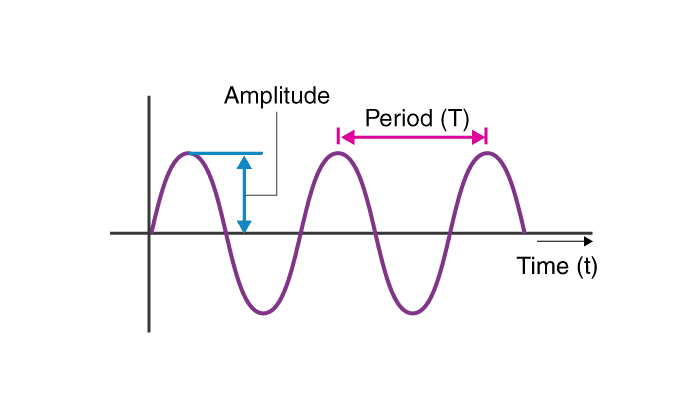
When we’re talking about sound, the period is the amount of time it takes for a complete wave cycle to pass. A wave cycle starts at zero amplitude. It has a peak and a trough and will also end at zero amplitude.
Each air particle will move along the trajectory of the wave. We call the position of the air particle in the wave the phase, and it constantly changes.
Why Is the Phase Important?
When you listen to music, you can hear the pitch and volume. But, can you hear the phase? The short answer is no; you can’t hear the phase, but you can pick up on it.
If a sound is traveling on its own, you can’t tell what phase it’s in. It could be at the beginning of the wave or the end. And, it doesn’t make much of a difference; it will all sound the same.
But when more than one sound wave travels together, they can interact. How the waves interact will depend on the phase.
There are a couple of ways two waves can interact. We call these interactions interference.
Constructive Interference
When two sound waves interact, they can go through constructive interference. Constructive interference means that the waves will compound on each other. This makes a new stronger wave.
For example, you have two waves with different amplitudes. One of them has a peak of 10 meters, and the other has a peak of 15 meters. If both peaks meet, they join to make a new wave with a 25-meter peak.
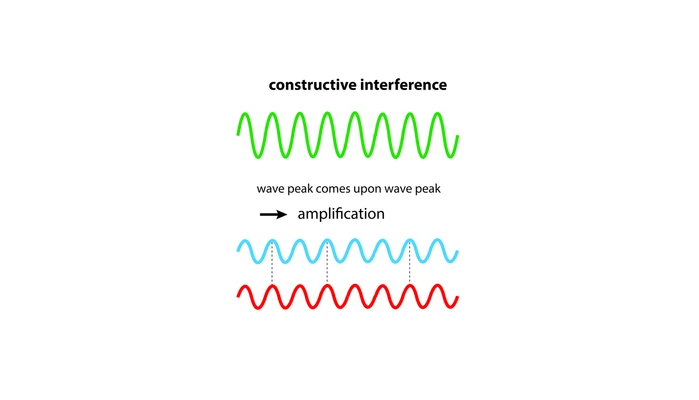
The easiest way to achieve constructive interference is through the phase. If both waves are in the same phase, the chances of the peaks meeting are relatively high.
The best example of constructive interference is a choir. When a group of people sings the same song in the same phase, they can sound much louder than any of them individually.
Destructive Interference
Destructive interference happens when the peak of a wave interacts with a trough. The interaction will cause the sound wave to attenuate. This will make the wave much weaker and thinner sounding.
If the peak and trough of the two waves are equal in size, they can cancel out each other. The waves will add up to zero, and the sound will go silent.
Most of the time, sound waves work on a tiny time scale. That means that many cycles can happen in less than a second.
So, when a peak and a trough cancel each other out, we don’t necessarily notice. The silence happens in a fraction of a second.
Still, we can notice the overall effect. Music with a lot of destructive interference will be significantly quieter. The notes are a little muted and blurred into each other.
Factors That Affect Phase in Music
We determine the phase of a wave by a couple of factors.
Medium
The medium that carries the sound wave is crucial. Each medium will allow sound waves to travel at different speeds. Believe it or not, sound waves travel much faster in solids than it does in gases.

This is how string phones work. You talk into one end of the phone; then, the sound waves will travel through the string and come out of the second cup.
When a sound wave moves from one medium to another, the phase will change. Changing the medium can be as simple as a change in humidity or temperature.
Distance
The distance between the sound source and the recording device can affect the phase. When you’re recording music, usually you’ll have two different microphones recording. The main mic records the audio and a boom mic to catch the surrounding sounds.
Even though both mics record the same audio at the same time, each one will have a different phase. This is because each mic is at a different distance from the source.
You can hear the phase difference more clearly in high-pitched sounds. It can sound more like static noise than a delayed echo.
Audio Mixing and Phasing
A phase of a wave isn’t significant when it’s on its own. For the phase to affect the final sound, there has to be more than one wave.
The effect of the phase becomes apparent when you record music. Audio mixing is the process of combining two or more sound waves.
To make music, we combine many sounds. A lot of the time, music will include multiple instruments and a vocal track.
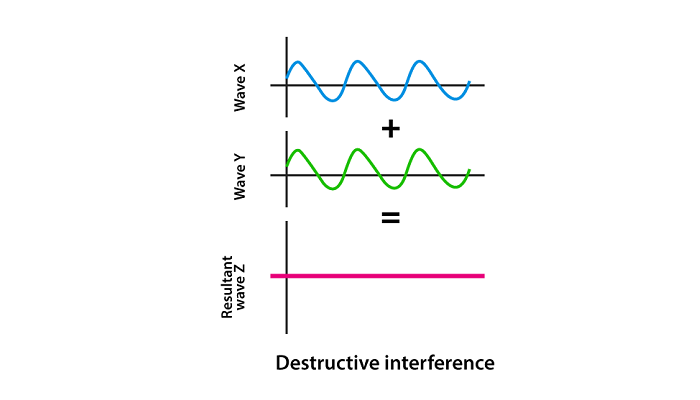
When you’re dealing with more than two sound waves, you’ll have more phase shifts. So, there is a higher chance of destructive interference. This means that if the phases of the waves aren’t in sync, you could lose the audio altogether.
Changing the phase of a wave can be a very useful tool. You can create phase shifts that can give you all sorts of different effects. But, most of the time, when you’re dealing with the phase, it’s about fixing an issue.
One of the most common issues with audio mixing is a phase shift, especially when you’re layering many audio samples on top of each other.
How to Fix Phase Issues?
Learning how to correct phase issues can be tricky. Over time, your ears can develop the ability to pick up on small phase shifts. But until that happens, you’ll need a little help.
The process of fixing phase shifts can be tedious, but it’s doable. There are a few ways for you to address a phase shift issue:
Mic Placement
This is something you can do before you even start recording. If you’re recording the same audio more than once, location matters.
Where you place your mic will change the phase. Make sure that the mic is at the same distance from the source every time.
Mic placement is also crucial when using multiple mics. When recording using two mics, it’s usually a good idea to place them right next to each other.

This may be tricky if you’re recording vocals and instruments together. You’ll want a mic at instrument level and another at the singer’s level. The only thing you can do is place the mics at an equal distance from the instrument and the singer.
No matter where you place your mics, there will still be a phase shift between recordings. But, you can minimize the shifts.
Audio Mixing Mode
There are two sound modes that you can mix in: monophonic and stereophonic. Monophonic is when you record and edit a single audio file. Stereophonic is when you involve more than one signal.
Using stereo as your main mode of mixing has many benefits. It can make your music sound fuller and more complex. But when you’re using many signals, phase shifts are bound to happen.
The easiest way to get around that is to mix in mono. It might be harder and more time-consuming, but the final product will be much more pleasing to the ear.
Tools
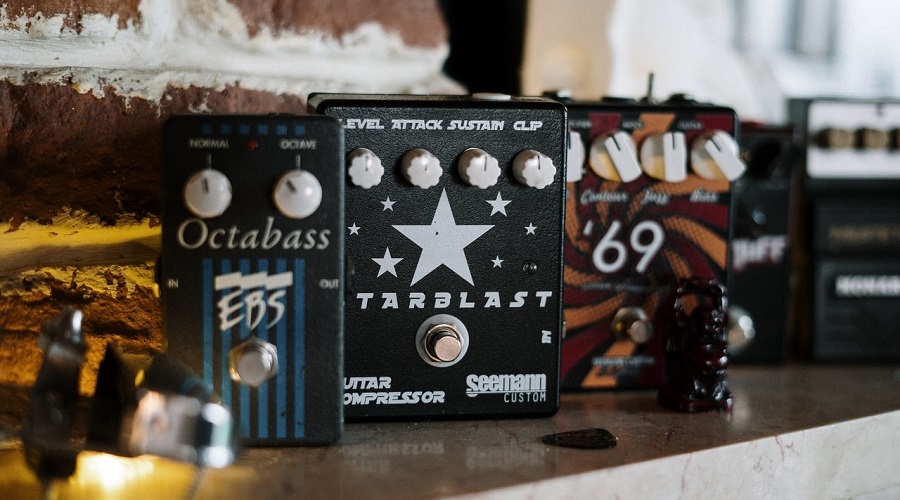
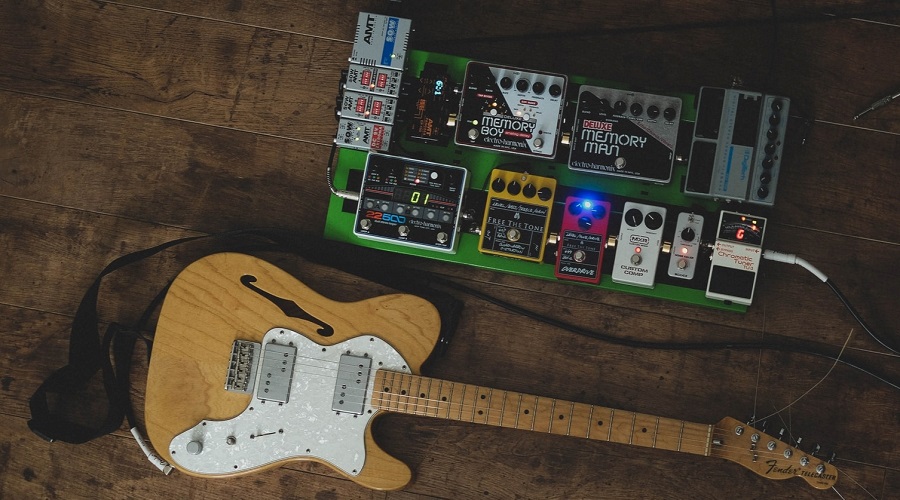
There are a few tools you can use to fix phase issues. The most common examples are phaser pedals and plug-ins.
A phaser pedal is a tool used to alter audio signals. Using frequency filters, the pedal can change the phase of a wave.
We use pedals mostly for live performances. They can help you address phase shifts in real-time.

Plug-ins are also incredibly useful tools. You can install them on a device, and they’ll give you access to many editing tools.
Many plug-ins come with pre-set phase editors. The phase editor will pick up on phase shifts and correct them automatically.
Effects You Can Do With Phase
Now, we’ve talked about the issues you can face with phase shifts. But there are many interesting effects that you can create using phase shifts.
Phasing
When two audio signals interact out of phase, they can create phasing. Phasing uses constructive and destructive interference to make a sound effect.
The effect of phasing can be quite subtle. You’ll only hear a faint difference.
But with a big enough phase shift, the effect can be incredibly noticeable. Phasing is how we make most robot sound effects and EDM.
Flanging
The flanging effect uses a specific type of phase shifting. In flanging, the phase shift is smaller than 20 milliseconds.
This creates a swooping sound. The effect is similar to the sound of a plane flying close to the ground.

Flanging can be a useful tool. The sharp dips in sound can create an interesting effect that adds a lot of depth to your music.
Chorusing
We can create chorusing the same way we create flanging. The only difference is the phase shift.
In chorusing, the phase shift is between 20 and 50 milliseconds. This slight increase in phase shift will have a completely different effect.
Chorusing is much milder than flanging. The sound is much more calm and full. Chorusing also makes harmonies more possible.
You can notice the effect in choirs. Even when the singers are not singing in perfect unison, they can still harmonize.