 Steve PMH
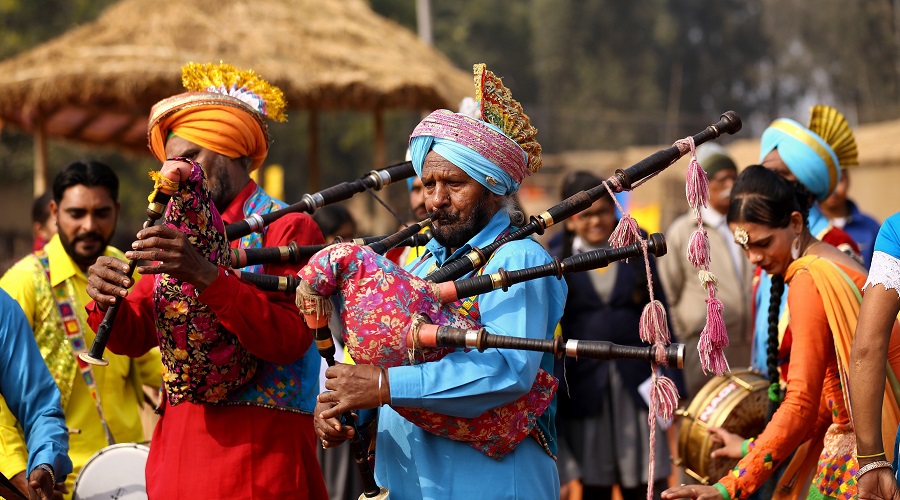
There’s virtually nowhere in the world without the presence of music. It’s an integral part of any community, and the diversification of music becomes more apparent as you travel across different cultural and ethnic groups.
Humans have an innate desire to create whatever they can imagine. Therefore, interaction with sound is inevitable, and people have always found music inseparable from their lives.
So, what is world music exactly?
Well, in this article, we’ll go over the complex history of world music, discuss some of the most prominent types, and outline all the notable differences between them.
Let’s get started!
What Is World Music?
As the name implies, world music refers to music across all the countries of the world. It was first coined in the 1960s by an ethnomusicologist named Robert Brown at Wesleyan University in Connecticut.
It’s argued among purists that there’s no musical term referred to as world music. However, it seems imperative that there’s a clear distinction between the different styles of music across all cultures.
The knowledge of the history of music and why it’s widespread across different cultures worldwide is a plus to every music composer or enthusiast. We encourage you to study the history of your musical heritage to reach a deeper understanding of your culture’s music.
History of World Music

It’s believed that the term “World Music” first started as a marketing scheme. It was used in the early twentieth century to enable Western companies to sell more foreign music.
Despite the commercial history, the term had contributed to a shift in the consciousness of musicians and producers by the early 1960s. People were more aware of different kinds of music out there, and world music had become a true music genre.
In the 1980s, the term was popularized again as a marketing strategy for non-Western music. It was later developed to include subgenres like Worldbeat and Ethnic Fusion.
The Western world has had a massive musical heritage that evolved over the years across different countries. However, some African, near-Eastern, and Asian musical traditions had also prospered for thousands of years. Whereas China, Japan, Indonesia, and India had long-standing music traditions, only well-trained musical artists were allowed to perform.
Art music isn’t recognized in the majority of the non-Western world. Instead, people depend on music as a functional part of their daily lives, in which the whole society participates.
In 1982-1983, British record companies, American promoters, distributors, and some journalists began to show an interest in foreign music, especially African music, which was back then synonymous with world music.
The broad categories of world music include isolated forms of ethnic music from different geographical regions. This diverse ethnic music is generally classified according to its local roots.
In the 1990s, an American trade magazine called Billboard set a precedent with the introduction of world chart music, causing the industries to recognize world music. The National Award of Recording Arts included a world music award to its Grammy nominees a year later.
Over the past centuries, when sound recording was invented, access to music among musicians and the general public gave rise to a term called “crossover.” Musicians from different cultures and locations can easily access recorded music from anywhere in the world and even visit other countries to play their own music.
The term ‘World Music’ was also used as the opposite of local music, referring to anything that would differ from what the local ear is used to. There are other interpretations that vary from country to country. However, the most important thing was that popular music artists from different Western countries could now aspire to reach a worldwide audience.
Superstars such as Bob Marley and Michael Jackson were taken as role models by some people around the world.
World Music in the United States and Britain
From 1983 to 1986, over 50% of the world music labels came to life in Britain. However, they had vastly lower sales, so only a few survived.
Among these labels were Peter Gabriel’s records. He extensively supported the initiation of the annual WOMAD festivals, in addition to the World of Arts and Music.
This festival began in 1982 and later brought about the introduction of many artists who are world music figures. Examples include Nusrat Fateh Ali Khan, a Pakistani singer, and Youssou N’Dour.
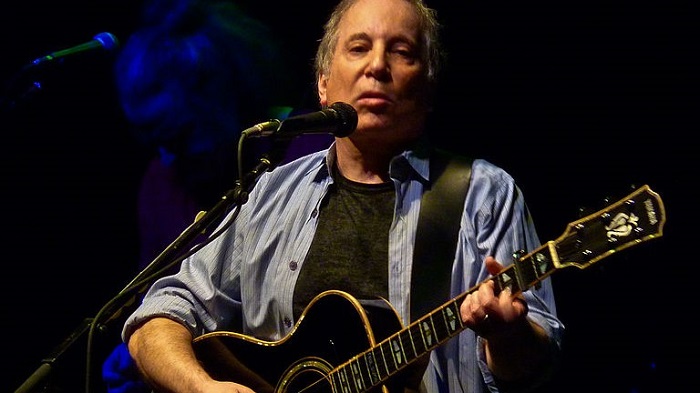
Many American labels like Rykodisc, Rounder, and Shanachie, started and expanded their world music records during this time when three American Rock artists, David Byrne, Paul Simon, and Ry Cooder, played a significant role in expanding the world music market.
Simon’s award-winning Album Graceland in 1986 featured black South African musicians who assisted him in the recording and explored with him, despite the trade boycott in South Africa at the time. The album was quite popular back then, and it enhanced the growth of world music.
David Bryne, known as the Talking Heads, employed Latin American musicians to play on his album, and he launched the label with a series of compilations of music from Cuba, Cape Verde, Brazil, and Peru.
Ry Cooder was one of the prominent guitarists of his generation. He began his music career in the 1990s, in collaboration with V.M Bhatt, a famous Indian artist and a band of veteran musicians known as the Buena Vista Social Club.
Musical References on Non-Western World Music
Non-Western music is built on concepts that are quite different from Western music. These are the key aspects in which they differ.
Texture

In non-Western music, harmony is not as important as the other aspects. Instead, it’s either heterophonic (two or more versions of the same melody performed at the same time) or homophonic (a single melody).
Dynamics
In music, dynamics are the element that determines how low or soft the sound should be played.
Dynamics are seldom used as an independent concept in non-Western music. Increasing and decreasing the number of performers is done to change the loudness or quietness of the music.
Tone Color
Tone color, or what’s rather known as timbre, refers to the quality of sound, where we use tone color to separate one instrument’s sound from another.
Some cultures have developed independent instruments, despite the vocal nature of non-Western music. Wind instruments, colorful percussion sounds, and unique strings are mostly used.
Rhythm
Non-Western music, most especially African music, employs the use of creative rhythm far more extensively than Western Classical and Pop music traditions. While Western music largely sticks to regular, repeating time signatures and metrical structures, African music embraces a much freer and more fluid approach to rhythm.
Form
Non-Western music is not well structured like Western music. Non-Western music relies heavily on improvisation, so the music cannot be performed the same way twice.
In essence, the composition only exists during the performance. There are no written notes of it, which is totally different from Classical Western music that relies strictly on written musical notes.
Examples of World Music
There are different types of world music according to the diverse cultures around the world. A few of them are explained below.
Indonesian Music

The Republic of Indonesia consists of around 13,000 islands in the Pacific Ocean, 1,000 are inhabited, and only 4,000 are named. It comprises over 300 ethnic groups with more than 250 different languages. As a result of this diversity, the society is filled with diverse Indonesian music, some of which are the Gamelan and Bali.
The Gamelan is a colorful instrumental unit, which consists of percussion instruments like drums, xylophones made from wood, and gongs. These instruments are supplemented by a string instrument or a bamboo flute and can be used in traditional ritual dances.
The Gamelan instruments pitch out sounds that are “out-of-tune” to Western ears. As a result of this, this music cannot be used with Western notation.
African Music
Music is a significant part of the life of all African nations and cultures. African music is closely tied to community rituals, oral traditions, and the embodied experience of dance and movement, and therefore almost all occasions or events are celebrated with the use of music.
Most African languages are tonal (this means that the meaning of the word spoken depends on the pitch level of the word). Thus, in African music, the pitch level serves more as a backdrop or framework for the rhythmic complexity to unfold, rather than being the primary means of musical organization and progression..
At the heart of this rhythmic creativity is the concept of polyrhythm – the simultaneous sounding of two or more independent rhythmic patterns. In many African musical forms, multiple layers of percussion, vocals, and other instruments interlock to create intricate, interlocking rhythms that defy simple Western time signatures.
A common characteristic of an African song is “call and response.” In this feature, the leader of the song calls to a past event or sings a chorus, then the people assisting will sing a response repeatedly. This is usually uniform throughout the song.
The resulting textures are richly complex, with the emphasis placed on the relationships between rhythms rather than a single, dominant time-keeping pulse.
Mexican Music
Music was an essential part of Aztec and Mayan social life on the Mexican peninsula. That was, of course, before the Spanish conquest in 1519. As soon as the Spaniards started to settle in the peninsula, European musical instruments quickly began to merge with the local musical traditions.
The most significant result of this influential contribution is the Mexican Mariachi. It’s a singing and dancing tradition in which singers employ the use of treble and bass guitars, violins, trumpets, and, sometimes, a harp. Although they originated in Europe, the sounds produced by these instruments are entirely Hispanic.
Middle-Eastern/ Near-Eastern Music

Most Near East and the Middle East countries border the Mediterranean, North Africa, and West Asia. They’re dominated by Arabic, Persian, and Turkish Islamic populations.
They share popular artistic and musical traditions that date back to the 7th century. One of the most common themes of Middle Eastern music is the use of “Oud.” It’s basically a fretless lute with a short neck and a pear-shaped body with 10 to 13 strings.
Unlike the western Pupa, the Oud is played as a monophonic instrument, usually accompanied by a colorful, rhythmic Darabukka (also known as “Darbuka” or “Doumbek”) that’s a small drum played by exerting small finger pressure on the drum head.
Indian Music
The Indian musical tradition dates back about 3000 years. Indian classical music is improvised using complex systems of rhythm and melody called Ragas (melody patterns) and Takes (rhythm patterns) to control the players’ choice of complex tones, decoration, and rhythm.
Indian artists inject a lot of spirituality in their music; each Raga is associated with a specific emotion, such as tranquility, heroism, or love.
Indian music circulates orally from the guru to the students, and the students learn by strictly imitating the teacher rather than learning from the written tradition. Only the important elements of the music are noted; most notations aren’t included and must be memorized through years of in-depth research.
The most important musical instrument in India is the Sitar. It’s a lute with moveable frets, a wide fingerboard, and a long neck.
In the sixties, famous bands such as The Beatles searched for enlightenment through Indian masters, and the Sitar was quickly popularized in the West. The most famous Indian master/Sitar is Ravi Shankar.
He became a popular foreign figure in the West when he performed in Woodstock in 1969. The Sitar can be accompanied by an instrument called Tabla.
Chinese Music

Traditional Chinese music originated from discovering the bone flute in the Neolithic Age, which can be traced back to 7,000 – 8,000 years ago.
In the Xia, Shang, and Zhou periods, only the dignitaries and royal members of the dynasty could enjoy music, which was made using the sounds of bells. In the Tang Dynasty, singing and dancing entered the mainstream and passed from the court to the common people.
With the introduction of foreign religions such as Buddhism and Islam, Chinese music has absorbed exotic flavors and religious melodies. Chinese people have enjoyed it all at the fairs held in religious temples.
During the Ming (1300 – the 1600s) and Qing (1600 – the 1900s), two generations of Chinese opera developed, and the famous Peking opera became one of the three major aspects of Chinese culture (tied with traditional Chinese medicine and traditional Chinese painting).
There are two prominent Chinese instruments. The first is the Zheng (a fairly large instrument with 21 to 26 strings on the bridge) and Erhu (a bowed instrument with two strings on the bridge).
What Is World Music: Conclusion
While the term “World Music” may have originated as a marketing label, it’s since evolved to encompass a profound understanding and appreciation of the unique sonic signatures that define the musical identities of cultures near and far.
World music reflects the boundless creativity and cultural richness of human musical expression across the globe. From the intricate polyrhythms of African traditions to the spiritual resonance of Indian Classical music, the world’s musical heritage is a testament to the ingenuity and artistry of countless communities and civilizations.
Whether it’s the gamelan orchestras of Indonesia, the soulful melodies of the Middle East, or the polyglot hybrids of the Modern era, world music continues to captivate and enlighten all who are willing to lend an open ear.