 Steve PMH
Whenever you go to see a rock band play, you know the types of characters that you will see.
The vocalist will lean in flirting with the audience, the guitarist will shred out some amazing licks, and the drummer is in the back sweating from the exercise.
Whether people realize it or not, they expect the bassist to be in the back just playing with a smile on their face.
Rarely do bassists take over the stage like Victor Wooten, Jaco Pastorius, or Paul McCartney. They just stand back and play their lines until the show is done.
Sometimes the bassist might appear to be lost in their thoughts.
Maybe they’re wondering if they left the iron on at home, if they remembered to feed their goldfish, or what their next drink will be.
They might even move their bass guitar to the music or sway in place as they appear to be an empty shell, absent except from their fingers moving slowly as they think out each note.
But the secret is that bassists are doing more than they appear to be. They are the essential glue that holds the entire group together.
You can get away with bad guitarists and bad vocalists, and some bands don’t even have a drummer.
But the bassist has to be solid, on time, in key, and definitive.
Keeping the Beat
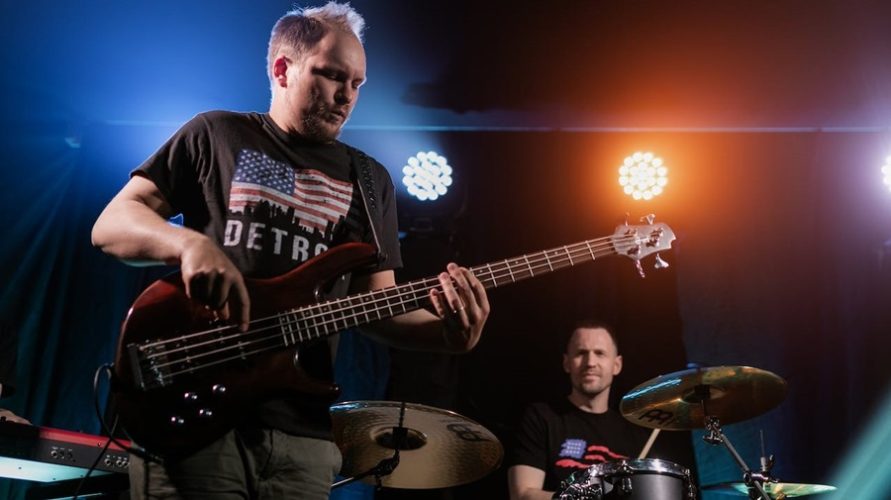
Drummers often get all of the recognition for keeping time, but the bassist is just as important.
Not just keeping time, but being in sync (not the boy band) with the drummer. They need to become a singular entity that drives the music forward.
Jazz players have referred to this type of playing as “locking in”.
The original reason was to allow drummers the chance to solo, but now it does more than that.
By removing the need for the drummer to be a metronome, the drummer is freed up to add flourishes to the top of the musical cake.
The other instruments continue to be propelled forward and now the drummer can use that cool set of chimes that he bought to give the band a “mystical” sound.
An even more basic need for locking in is that it sets the feel for the music.
Rock music has you land solidly on the beat, but jazz music requires the bassist to sit on the front side of the beat.
The front side placement pushes the music forward making it feel “faster” without actually being faster.
It’s a bit like when a bike gets stuck in 1st gear and the cyclist is pedaling frantically to keep it upright, but they are moving at only a snail’s pace.
Inversely, there are times when the style demands that the bass sits on the back side of the beat giving music a more relaxed feel.

Reggae music often uses this feel as part of their “chill” aesthetic. But no matter why the bassist is doing it (or what they did before the show), they have to maintain focus.
They aren’t just paying attention to themselves. They have to keep the entire band together.
There’s a joke that bassists like to tell each other, even in symphonies. Do you know why bassists count 6/8 time in two?
Because they can’t count higher than four. All that counting takes real effort and focus!
Throw into that when you’re doing something with syncopation, like a cool Calypso line that is rife with quick notes right before the beat.
The bassist is essentially telling everyone “….HERE COMES THE…beat.” That type of exaggerated lead-in requires steady counting.
While we’re on the subject of style, not all music uses the same strong beat combination.
Some use a four on the floor, others a 2 and 4 emphasis and others even a 1 and 3.
When you get into more complex meters, it obviously becomes, well, complicated. Almost like the relationship diagram for a poly amorous coupling.
Those can branch out in really fast. So by keeping the beat in the right way for the music, they have also become an ambassador of style.
Now if it just came with a cool hat, that would be even better.
Setting the Tonality and Chord Structure
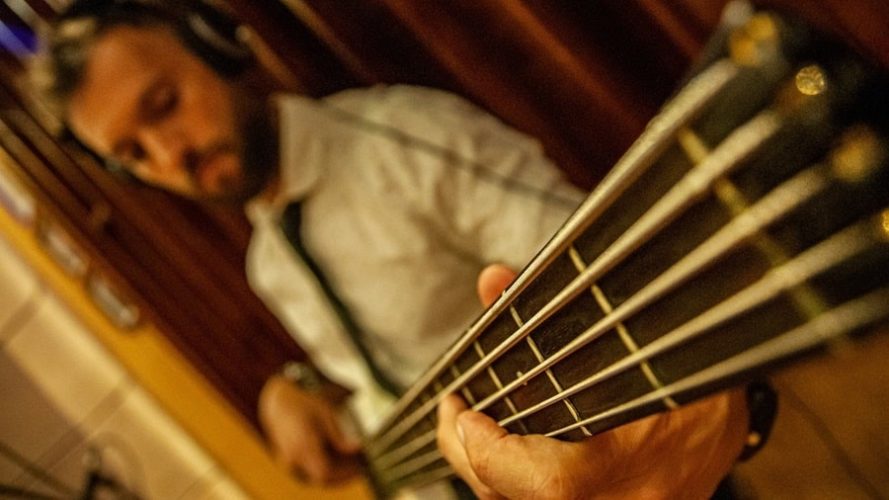
The bass can change the entire chord structure by just playing a different note.
Typically the bassist will navigate to the root and fifth of the chords, but sometimes by moving another tone to the bottom of the chord, they can create a new feeling.
Really good bassists can create and resolve dissonance on their own.
Some of the less experienced bassists are such naturals that they can’t create anything but dissonance.
But they don’t normally get a lot of love from the crowd for doing that.
But in all seriousness, the bassists hold all of the power.
Have you ever watched a band that is playing and then the bassist hits the wrong note and then everyone scrambles to meet at the perceived chord?
I have been that bassist and I have seen it happen.
It’s possibly the most embarrassing moment in a musician’s life for the entire band to stop and then you’re hit with dagger-filled stares.
You just want to melt into the floor or wish you could just go back to being the under-appreciated keeper of the backbeat.
If you have a keyboardist, it can be even worse. They’ll start taking over your job because you obviously can’t hack it.
Bass Lines can be Tedious
There’s a reason that people tend to pay attention to the vocalists, guitarists and drummers: they do really cool stuff!
The vocalist might be dancing or doing some type of acrobatics as they sing. A metal vocalist will drop into the full scream face that the crowds all know and love.

The guitarist will be shredding their lines to bits with the occasional flash of their fingers.
Even the drummer will be showcased as they throw out a few fills, a solo, or, at the very least, a stick flip. But not the bassist.
The bassist is often chained to an unimaginative note. And when they play something that everyone can vibe with, they end up playing it endlessly.
That’s what happened with John Deacon of Queen’s line for “Under Pressure.” It was so epic that it got sampled by Vanilla Ice in his hit “Ice, Ice Baby.”
Another timeless line that showcases an awesome riff becoming boring is “Sunshine of Your Love” from Cream.
It’s a simple line with a funky kind of style but it’s almost the entire song. And these are best-case scenarios.
Perhaps Bluegrass bassists have it the worst with simple root fifth bass lines. Part of this comes from the origin of the style being played on simple washtub basses.
If you’ve never played a washtub bass, it takes muscle, not talent, and a good ear.
And even with set pitches to be found on more modern instruments, the style has remained.
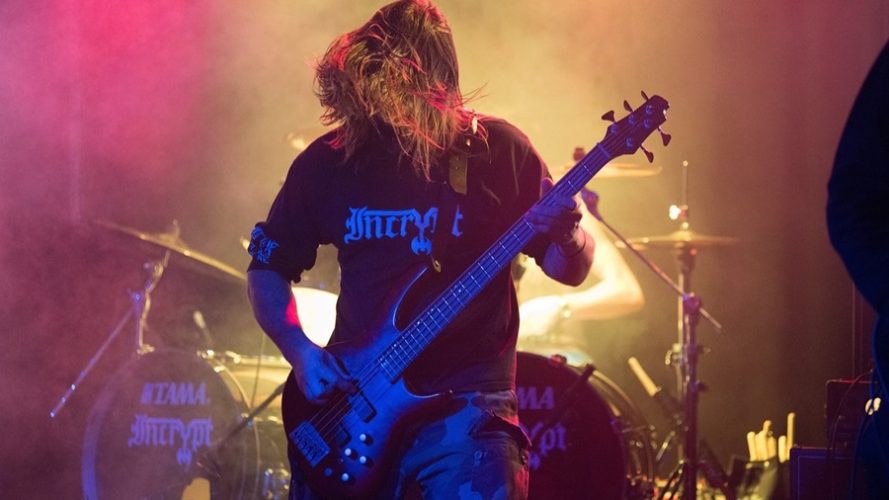
It’s arguable, though, that some forms of metal sentence the bassist to their own private hell: fast repeated notes on E-V-E-R-Y S-O-N-G.
That might have worked when the bassist first picked up a bass and wanted to goth out and play with a metal band in high school, but if they have been playing more than two years with the band, they have hopefully learned more tricks than playing the root as fast as they can while holding the metal horns and headbanging.
And if they have, they’re bored out of their skull each time an original fan asks for any song off of their first album that they recorded in the basement.
We can’t all be as talented as Murderface from DethKlok, but even Murderface only does something amazing during his solo.
The rest of the time he joins the majority of metal bassists on playing simple lines.
Bassists’ Brains are Workin’ Overtime
That all being said, you can see why bassists might seem less than enthused with their loot in life.
They are tasked with the two most important simultaneous tasks: keeping time and setting tonality.
A drummer only has to keep time and keyboardist or guitarists just need to hit a portion of the chord to finish the sound.
But the bassist is doing math, working on a Zen experience by connecting soul to soul with the drummer and they have to play the most boring sets of notes, because otherwise, it would all fall apart.
This tremendous planetary pressure is what the bassist is working under song after song after song.
So, you might be wondering:
If it’s so painful, why does anyone play the bass at all?
Ask a group of bassists and you will get a range of answers from a generic its fun, to because it relaxes them, or even because they are exercising control over the group.
But the real reason for a lot of us is that you get just as many phone numbers as the singer, the drummer or guitarist with less work.
So next concert, raise your pint to the bassist, the under-recognized controller of the band!