
 Steve PMH
Publishing, royalties, copyrights. Have you always struggled with these terms and assumed they all just meant the same thing?
Well, I don’t blame you. I’ve only known how everything connects in the world of music publishing recently!
So, what is publishing in music, and what do music publishers exactly do?
In this article, I’ll be your faithful guide to understanding the different types of music copyrights and how things go down in the music industry. It’s time that we find out what really happens behind the scenes of our favorite songs and music videos!
What Is Publishing in Music?
Music publishing is the business that revolves around the promotion of musical composition. In other words, the main job of music publishers is to ensure that songwriters receive royalties for their work.
Furthermore, music publishing paves the road for compositions to be performed and reproduced. While this is a straightforward way to put it, this part of the music industry is much more complicated than you might think.
Before we dive deeper into the concept of music publishing, let’s give you an idea about its background first.
The History of Music Publishing
Did you know that music publishing was an integral part of the music industry way before the first recording mediums came to the surface?
The concept was pretty popular in the early 20th century. Back then, publishers were responsible for converting musical compositions to physical copies on paper.
The duties of these people included making songbooks and helping them find their way to stores. After that, publishers will compensate the composers for the commercial use of their work.
Of course, that’s the most basic form of music publishing, but things changed as time moved on.
Sure, the core role of a music publisher remained pretty much the same until this day. However, with the evolution of recorded music, it’s only normal that the job of a music publisher became different.

Today, it’s not merely about representing composers to ensure that they get their recognition in money. It’s not about getting the authors of a musical composition a percentage of songbook sales anymore!
Instead, music publishers collect royalties across the entire industry on the artists’ behalf. In other words, they make sure that commercial use of the author’s work, even if it’s derived, doesn’t go unnoticed.
But how does music publishing work anyway?
To understand this broad term, you must be familiar with other concepts such as copyrights and royalties. In the following sections, I’ll discuss these points more in-depth.
What Are the Two Types of Copyrights in Music?
If you’re a beginner in the music industry, or you’re someone who only enjoys listening to 80s rock anthems without background knowledge, you may not know the two main types of copyrights in music. These are the composition and the master.
Let’s find out what these terms mean and how they’re connected to music publishing.
In a song, the composition refers to the part that doesn’t include lyrics. It can be the melody, the harmony, the beat, etc. To make the picture clearer, a good example of composition rights is sheet music rights.
On the other hand, the master, a.k.a sound recording, describes the entire musical track. It’s the expression of the aforementioned composition after being recorded and produced. For instance, the songs that you stream on Youtube or Spotify are master recordings.
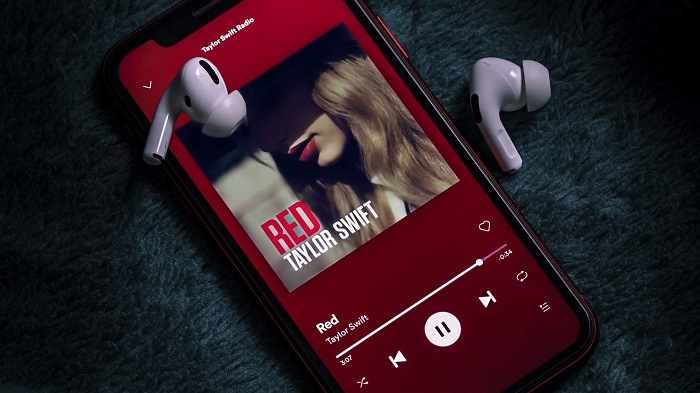
The bottom line is that every song that you listen to has both composition and master copyrights. In a typical scenario, a person who composed a track from scratch has both rights. Still, in today’s world, that might not always be the case.
Take cover versions for example. I’ve always wondered about how these are copyrighted myself!
When someone creates a cover for a Nirvana song, they will only get the master recording copyright. Alternatively, the composition rights will still belong to the legendary band. I mean, the cover maker didn’t compose the lyrics or guitar riffs themselves, right?
Therefore, if someone publishes an entire Nirvana song as-is on Youtube, for example, the right holders will have to take it down. Of course, not all cases of right infringement are as simple as this one. Still, it’s a basic example to be aware of.
How Is Music Copyright Obtained?
To own the rights of a musical composition, under US law, two things must be done. The first thing is to create your original work. The second step is to fix this composition in any medium of expression of your choosing.
A medium may be in the shape of a MIDI track, sheet music, or even a post you’ve sleepily written on your Facebook at three am.
Once you do these two things, you’ll obtain the copyright to your music, which will allow you to do multiple things with the composition. For example, you get to distribute your work, perform it in public, or create derivative forms based on it.
Now, as a copyright owner, you’ll have the power to control how your work is used. You can prevent third parties from using it altogether.
If someone wishes to exercise one of your rights, they’ll have to get a license from you. Afterward, they must compensate you in royalties.
But what are the types of royalties that cover each part of composition copyright?
The Three Types of Music Publishing Royalties

The first thing you should know regarding music royalties is that they’re not the same in all countries. This is because they’re subject to copyright legislation, which can vary according to the laws of each country.
In this section, we’ll focus on US publishing royalties to keep confusion at bay.
1. Mechanical Royalties
Mechanical royalties describe the compensation that a songwriter gets for the reproduction of their compositions. These royalties are usually paid by third parties that work to manufacture and distribute the musical work.
A little lost? Let me give you some examples.
Back in the early recorded music days, the role of these third parties was to mechanically produce the medium that carried the music. That explains the rather strange name.
However, now with the beauty that is music streaming, we calculate mechanical royalties differently. These mechanicals will be generated only when someone plays the song on the streaming app. That app could be Spotify, Apple Music, etc.
In the case of interactive streams, the mechanicals are paid to the music publishers by DSPs (Digital Service Providers). On the other hand, on-demand downloads and physical sales play this game in another manner.
In this scenario, the mechanical royalties will be paid to the sound recording owner first. For that reason, record labels make sure to distribute the royalties so that the owner and publisher get their fair share.
In both types of mechanical royalty compensation, the record label or DSP must pay fees to the mechanical rights organization (HFA). After that, the HFA will distribute those fees to the owners of the composition and their music publishers.
There’s a lot going on backstage, right?
2. Public Performance Royalties
The next type of music publishing royalties that we have is public performance. As the name suggests, these royalties compensate composition owners for the display of their music in public. Thankfully, these are a lot easier to understand than the previous beast!
Take it this way: Every time that your favorite rock anthem is played in public, the right owners immediately get paid. Public performance includes countless scenarios. These include a radio broadcast, background music in Starbucks, and even digital streaming.
The ones responsible for the management of public performance royalties are performance rights organizations (PROs). In the US, a few examples of these organizations are SESAC, ASCAP, and BMI.
What happens here is that the compensation will find its way to the publishers and composition owners based on the type of public performance. The royalties here branch out to two sections:
- Royalties paid by streaming services
- Royalties paid by public broadcasters
Let’s get to know these buddies in-depth.
Streaming Service Royalties
In the first instance of public performance, the DSPs pay out a percentage of their revenue to PROs.
Of course, this share is then distributed among all right owners on the platform. Now, every time I listen to my favorite Sum 41 song on Spotify, my mind will conjure these details!
Naturally, the exact percentage that DSPs pay out is a result of numerous negotiations between them and the PROs. But that’s everything in life, right?
Public Broadcaster Royalties

These royalties are linked to all the conventional public performance users out there. These include radio stations, TV channels, clubs, coffee shops, retail stores, restaurants, etc.
These venues must acquire a blanket license from PROs to have a right to broadcast music as they please. The music industry sure is full of strange-sounding terms, don’t you agree?
A blanket license gives broadcasters the chance to play whatever tracks they like. So it’s not limited to certain artists or a definite number of songs. However, the cost for this license depends on the potential audience of the platform.
To calculate the overall cost for these playback rights, broadcasters report their playlists to PROs on a regular basis. After collecting data from broadcasters, the PROs will then calculate the royalties due to the right owners.
The bottom line is, whenever you hear your jam playing on the radio while munching on McDonald’s fries, remember that there’s a blanket license behind it. It can be pretty hard to unsee, or unhear, this now that you know!
3. Synchronization License Fees
Synchronization license fees are connected to the process of creating derivative work based on the composition. In short, it compensates songwriters for the use of their musical compositions in other projects.
Need an example?
When someone wants to use a part of a song in a show episode, a movie, or an ad, they must get permission from the copyright owners. In the music industry, this process goes by sync licensing.

What you might notice here is that sync licensing isn’t the same as getting a blanket license. Sync royalties apply to a specific piece of music, whereas a blanket license can allow you to put whatever songs on play in the store you’re running. But what difference does this make?
Well, you should know that sync agreements are always directly negotiated by users and copyright owners. As a result, the fees for a sync license can be a hundred times more than the ones that come with a blanket license.
Think of it this way. When someone wants to use a song by Ariana Grande in their TV ad, they’ll be dealing with the singer’s copyright representatives. That should cost them a substantial amount of money.
Yet, including the same song in a radio broadcast won’t have the users pay more than their usual public performance royalty fees. Fair enough, right?
What Do Music Publishers Do?
Now that you have enough background information regarding music copyrights and royalties, it’s only natural to ask an important question.
“But where do music publishers fit in all of this?”
Well, we’re about to find out!
In the general sense, music publishers hold the authority to license the copyrighted use of a piece of music. They sign contracts with songwriters to work out the details of their rights.

Yet, most importantly, music publishers work hard to maximize the cash flows that we’ve already discussed.
The following points sum up the entire lifecycle of a music publisher. As you’ll see, their work includes much more than meets the eye.
- Registering the composition with the local PRO
- Managing and collecting royalties
- Developing the careers of songwriters
- Scouting for talents
- Negotiating the music rights to maximize the songwriters’ share
- Promoting the compositions to ensure that they continue to be performed for as long as possible
After reading this long list of roles, it’s apparent how a music publisher can be an essential part of a songwriter’s career. Still, not all songwriters need publishers for the same reasons.
Therefore, what a music publisher does depends entirely on the type of publishing deal that they have with a songwriter. Of course, there are several versions of publishing deals out there. However, a few have quickly become industry standards as the years rolled by.
But before we go through each type of those deals, why don’t we become more familiar with the concept of a publishing deal first?
What Is a Music Publishing Deal?
Here’s a simple way to put it. A publishing deal revolves around transferring a part of a songwriter’s copyright to a publisher. Of course, this exchange allows the publisher to authorize the use of the composition.

In return, the songwriter will get a share of the royalties that the publisher will later collect.
See, when you write a song, it automatically emerges with two equal shares of royalties. In this case, even if it’s just one writer, the composition will split into a writer’s share and a publisher’s share.
Now, a publisher will work hard to maximize the publisher’s share on behalf of the songwriter. In exchange for their efforts, they’ll get a percentage of that share, too. And here lies the importance of having a music publisher.
Without a publisher, the songwriter will only get the writer’s share, which makes up 50% of their royalties. However, one of the greatest things about the music industry in the digital era is that there are a few ways to solve different problems.
If someone doesn’t want to hire a publisher, they could self-publish their work. Of course, this is backed by the PROs, which have founded several solutions to allow songwriters to do just that.
What Are the Types of Music Publishing Deals?
The amount of work that a publisher will do on behalf of a songwriter relies on the nature of their publishing deal. In this section, we’ll quickly go through each type of publishing deal.
1. Full-Publishing Deals
While these deals used to be the rage back in the day, they’re the least common nowadays. Basically, a full-publishing deal means that a publisher will own all of a songwriter’s songs for the rest of their lives.
In other words, the publisher will have and retain 100% of the publisher’s share.
2. Co-Publishing Deals

On the other hand, a co-publishing deal is the most popular type of music publishing deal these days. Here, the songwriter’s micro company and the publisher work together to put out the composition. As a result, they both get 50% of the publisher’s share.
In this case, the songwriter will get 75% of the royalties, which include the writer’s share as well as half the publisher’s share.
3. Administration Deals
An administration deal is slightly different from the previous two. Under this deal, the publisher is only assigned the role of collecting and authorizing royalties on behalf of the songwriter.
Here, the songwriter has full control over their work, and they pay their publisher about 10-25% of the publisher’s share. So, as long as the deal is in place, the publisher will get their percentage in the form of administration fees.
While all these details may seem confusing in the beginning, I’ve found out that they were easy to wrap my mind around eventually. Hopefully, you’ll feel the same, too, especially if you’re ready to start a career as a songwriter!